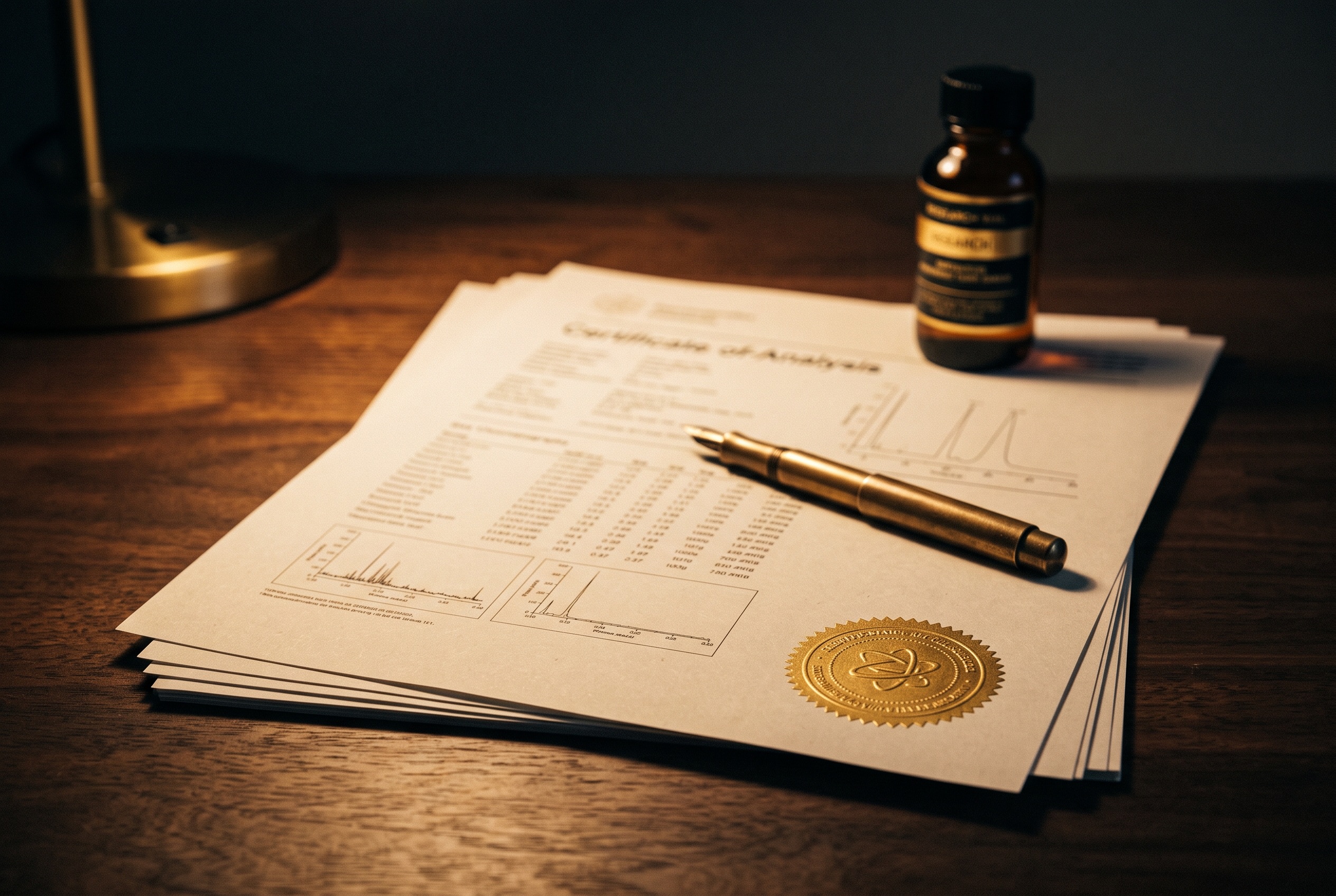
What a certificate of analysis shows ↗
A certificate of analysis records analytical results for an identified sample or lot. It is distinct from a catalogue specification.
Review guide
A concise guide to what each catalogue record publishes, how those figures are derived, and what this site deliberately does not claim.
01 / The catalogue
Every record states its product name, listed strength, listed format, sequence, molecular formula, computed molecular weight, residue count, and molecular class. Molecular weights are computed from the formula where one exists, rather than restated.
02 / Review flow
Check the listed strength, sequence, molecular formula, and computed mass on the record itself.
Each record states its molecular class and research area, so comparable materials sit together.
Use the compare tool to put two records against each other before choosing.
03 / Glossary
A certificate of analysis records analytical results for an identified sample or lot. It is distinct from a catalogue specification.
HPLC separates components under a defined analytical method. A reported purity result depends on that method and its detection conditions.