01 / What it is
TB-500 is a synthetic fragment corresponding to the active region of thymosin beta-4, a naturally occurring protein involved in cell migration and repair. It is a companion compound to BPC-157 in recovery research.
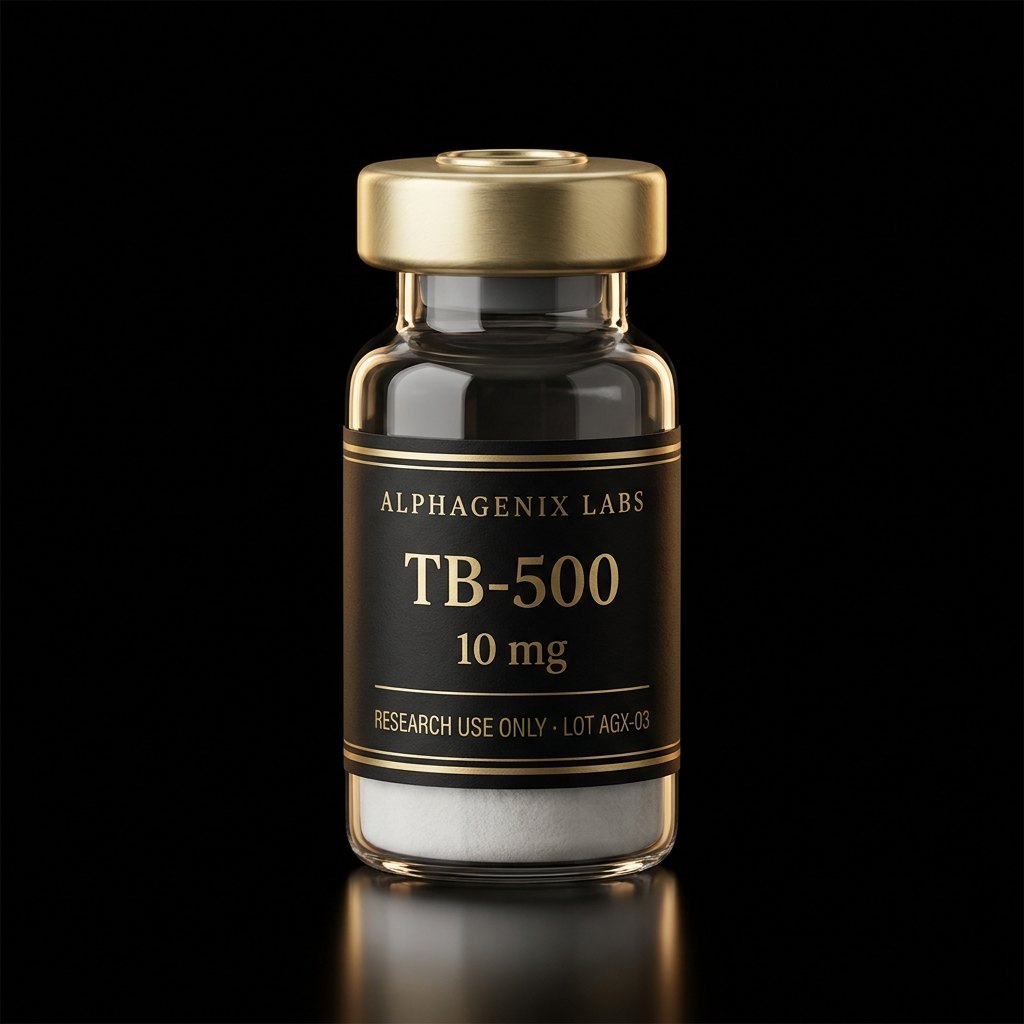
Tissue & repair-signaling research · AGX-03
The actin-binding thymosin fragment
01 / What it is
TB-500 is a synthetic fragment corresponding to the active region of thymosin beta-4, a naturally occurring protein involved in cell migration and repair. It is a companion compound to BPC-157 in recovery research.
02 / Mechanism in the literature
Its activity centers on actin regulation — the protein that builds the cell's cytoskeleton — supporting cell migration and, in research models, angiogenesis and tissue remodeling.
03 / Research context
TB-500 is studied in wound-healing, flexibility, and systemic tissue-repair literature, frequently alongside BPC-157.
04 / Common questions
It is a synthetic fragment representing Tβ4's key active sequence, not the full 43-residue protein.
Research often studies them together because their tissue-signaling mechanisms are considered complementary.