01 / What it is
BPC-157 is a synthetic 15-amino-acid peptide derived from a protective protein found in gastric juice. It is one of the most-studied compounds in tissue-repair and recovery research.
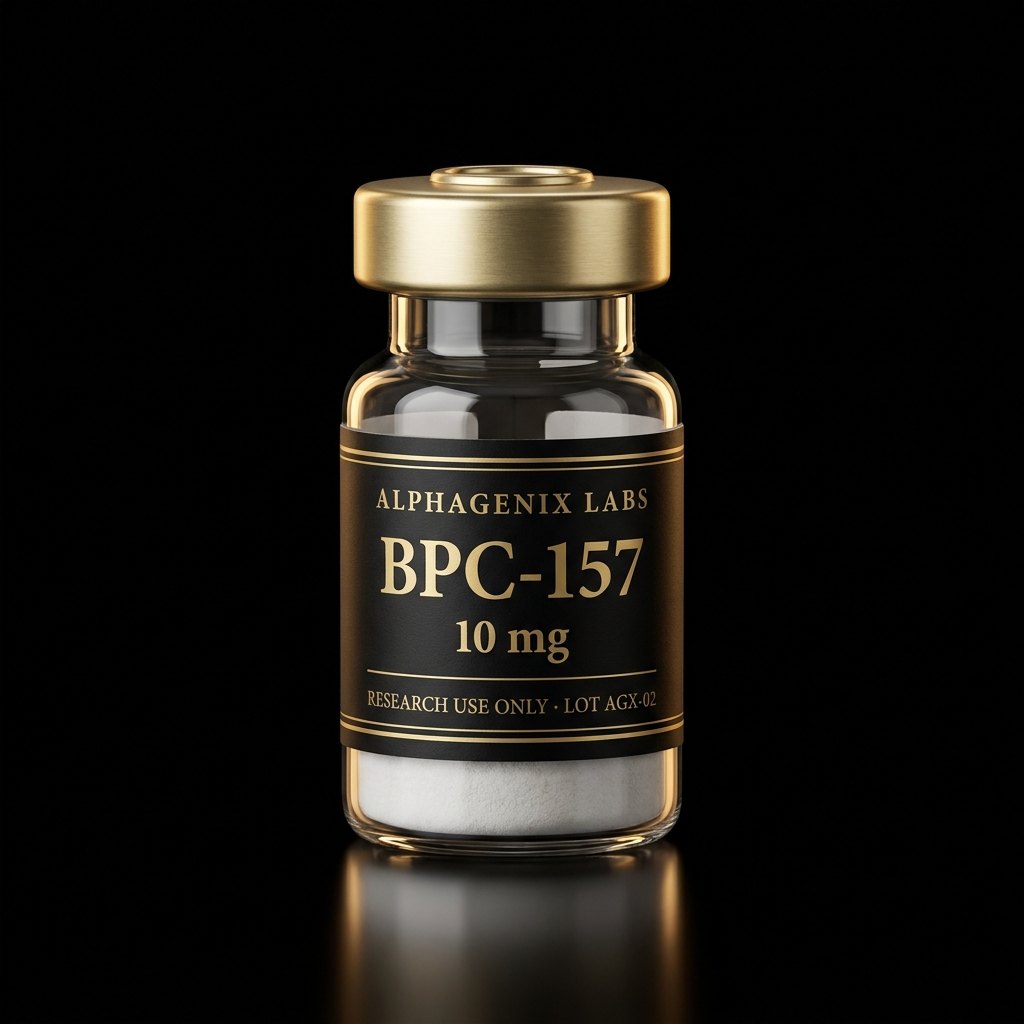
Tissue & repair-signaling research · AGX-02
The pentadecapeptide repair signal
01 / What it is
BPC-157 is a synthetic 15-amino-acid peptide derived from a protective protein found in gastric juice. It is one of the most-studied compounds in tissue-repair and recovery research.
02 / Mechanism in the literature
In research models BPC-157 is associated with angiogenesis (new blood-vessel formation) and modulation of growth-factor and nitric-oxide pathways, which underlie its interest in tissue-signaling studies.
03 / Research context
BPC-157 appears widely in tendon, ligament, gut, and soft-tissue repair literature as a cytoprotective and tissue-signaling peptide.
04 / Common questions
A peptide of exactly 15 amino acids — 'penta-deca' = fifteen.
It is a synthetic fragment based on a body-protection compound (BPC) identified in gastric juice.